How It's Printed
DTG · DTF · THE MACHINES BEHIND YOUR DESIGN
Two printing technologies put your artwork onto fabric, and each garment in our range uses the one it's best suited to. Here's exactly what happens between clicking “order” and the parcel at your door — the inks, the presses, the quality checks.
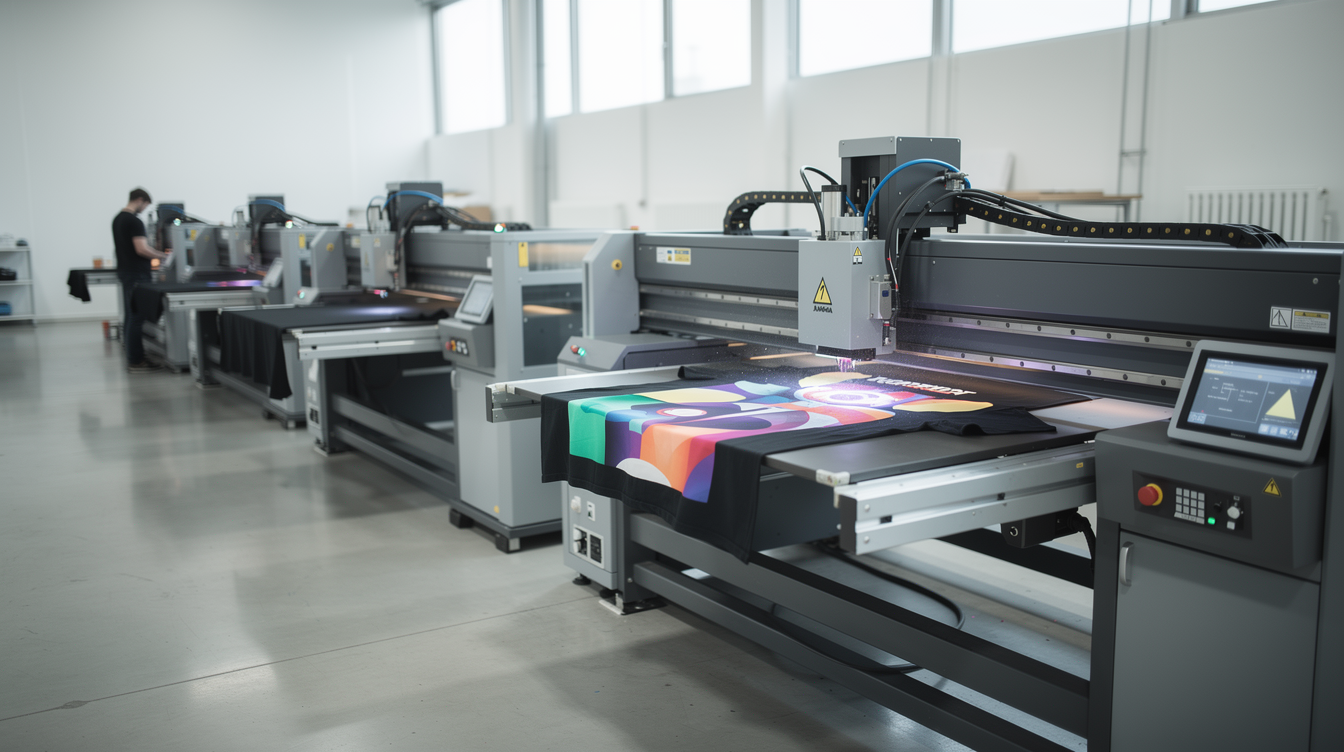
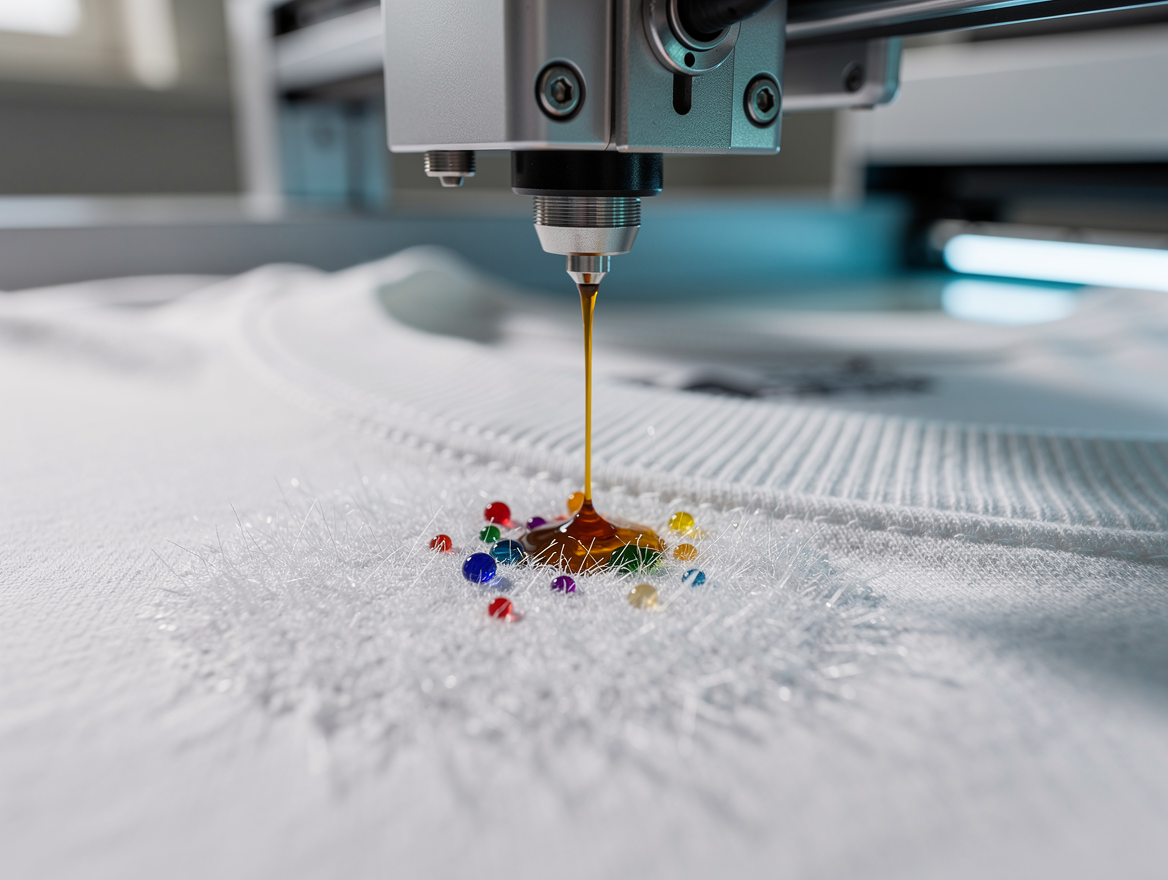
DTG — Direct-to-Garment
- What it is
- An inkjet process that prints water-based inks directly into the fibres of the fabric, like a photo printer for cotton.
- How it works
- The garment is pre-treated, laid flat, and printed in a single pass at up to 1200 dpi. Inks are then heat-cured so they bond permanently with the cotton.
- Best for
- Cotton-rich garments and artwork with gradients, photographic detail and fine texture — our t-shirts and sweatshirts.
- How it feels
- Almost nothing. The ink sits in the fabric, not on it, so the print area stays soft and breathable with no plastic hand-feel.
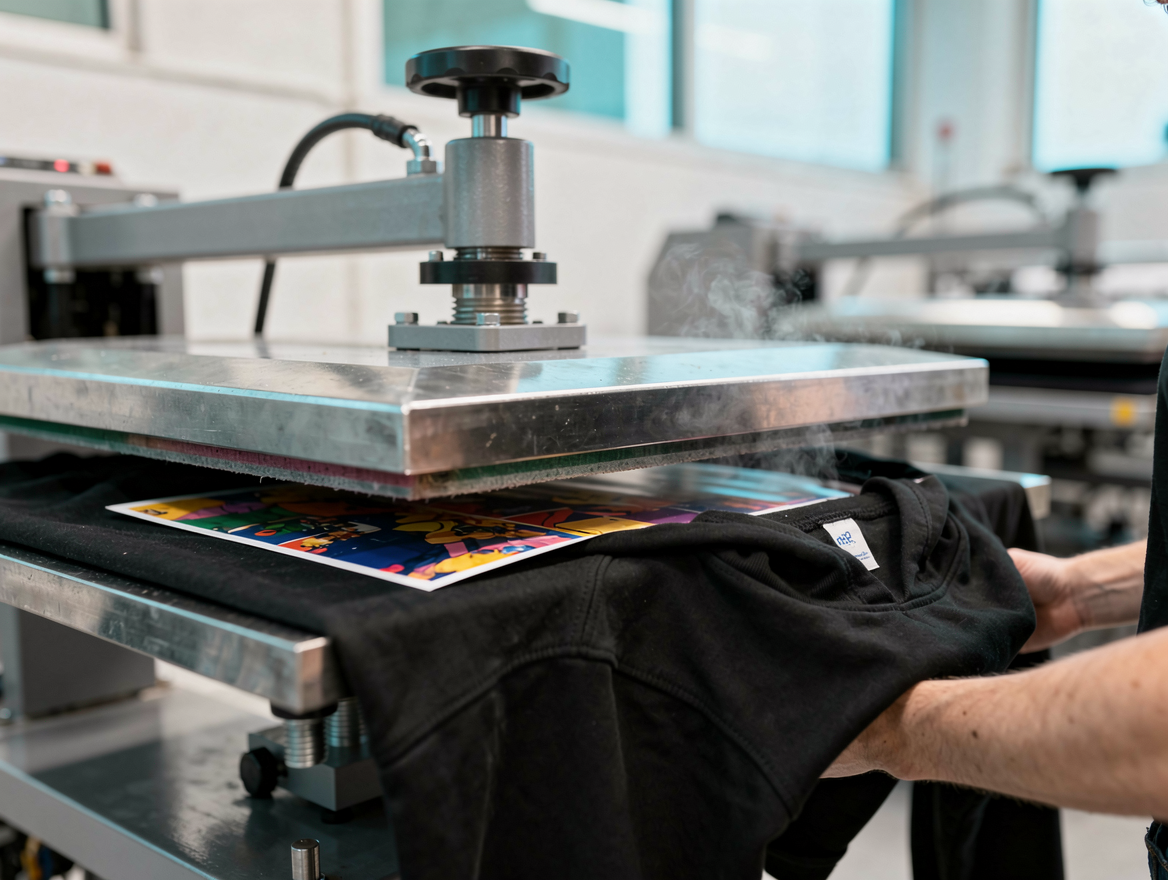
DTF — Direct-to-Film
- What it is
- The design is printed onto a special film with a powdered adhesive, then heat-pressed onto the garment.
- How it works
- Artwork is printed mirror-image onto PET film, coated with adhesive powder, cured, and transferred onto the fabric under a heat press at ~160 °C.
- Best for
- Fleece and blended fabrics where ink can't soak in evenly — our hoodies, joggers and shorts — plus ultra-vivid colour on any base.
- How it feels
- A thin, flexible layer with a slight satin touch. More surface presence than DTG, exceptional colour punch and edge sharpness.
Which garment uses which
| Garment | Print method | Max print area |
|---|---|---|
| Men's T-Shirt | Direct-to-garment (DTG) — front, back, left chest or sleeve | 12″ × 16″ (≈ 30 × 41 cm) |
| Men's Hoodie | DTF transfer — front, back, left chest or sleeve | 12″ × 14″ (≈ 30 × 36 cm) |
| Men's Sweatshirt | Direct-to-garment (DTG) — front, back, left chest or sleeve | 12″ × 14″ (≈ 30 × 36 cm) |
| Women's T-Shirt | Direct-to-garment (DTG) — front, back, left chest or sleeve | 12″ × 16″ (≈ 30 × 41 cm) |
| Women's Hoodie | DTF transfer — front, back or left chest | 12″ × 14″ (≈ 30 × 36 cm) |
| Women's Sweatshirt | Direct-to-garment (DTG) — front, back or left chest | 12″ × 14″ (≈ 30 × 36 cm) |
| Joggers | DTF transfer on the left thigh — auto-fitted to the garment | 9″ × 11″ (≈ 23 × 28 cm) |
| Shorts | DTF transfer on the left leg — auto-fitted to the garment | 8″ × 9″ (≈ 20 × 23 cm) |
Method per garment as configured in production. Leg prints on joggers and shorts are auto-fitted by the print partner.
Built to survive the wash
Both processes are rated for 50+ washes when cared for correctly. DTG inks are OEKO-TEX certified, water-based and cured into the fibre; DTF transfers are stretch-tested so they flex with the fabric instead of cracking.
The single biggest factor in print life isn't the technology — it's the wash. Four habits keep your design sharp for years:
- Wash cold (30 °C or less), inside out, with like colours
- Skip the dryer when you can — line drying is kindest to prints
- Never iron directly on the artwork; iron inside out if needed
- No bleach, no dry cleaning, no fabric softener on the print
From click to courier
Your AI design is upscaled, background-cleaned and colour-profiled for fabric, then positioned to your chosen placement automatically.
The exact garment, colour and size you ordered is pulled from stock — nothing is printed speculatively, ever.
DTG garments are pre-treated and printed; DTF designs are film-printed and heat-pressed. Either way, your piece is printed individually, for you.
Print alignment, colour fidelity and fabric condition are inspected by hand before anything is approved for packing.
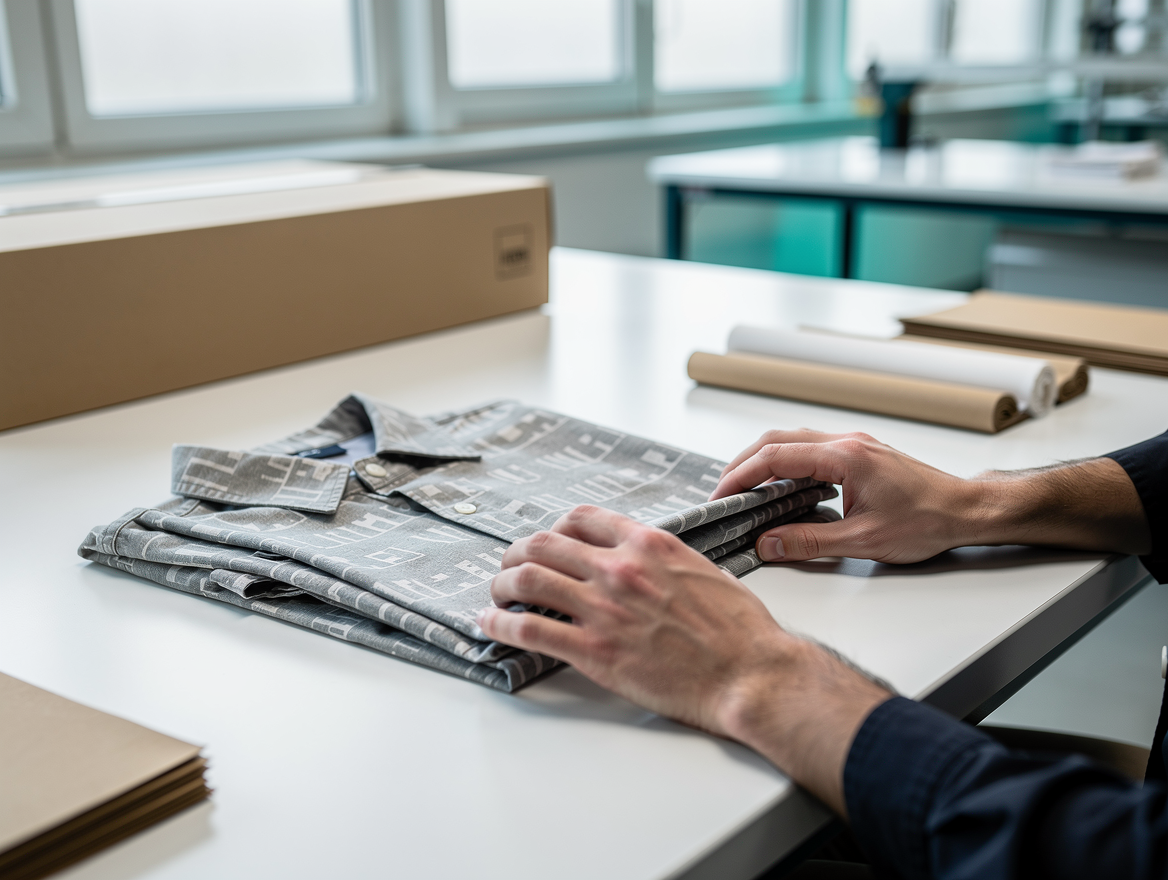
Folded, slipped into a slim recyclable mailer and handed to the courier — typically 2–5 business days after your order, from a print facility inside Europe.
One process, two fabric tiers
Standard and Premium tiers use the same printing technology — the difference you're paying for is the blank underneath: heavier combed cotton, softer hand-feel, retail-grade cut. See the full fabric breakdown in the Garment Guide.
See it on your own design
The best way to judge a print is to make one. Generate a design and preview it on any garment in seconds.
Open the AI Design Studio